
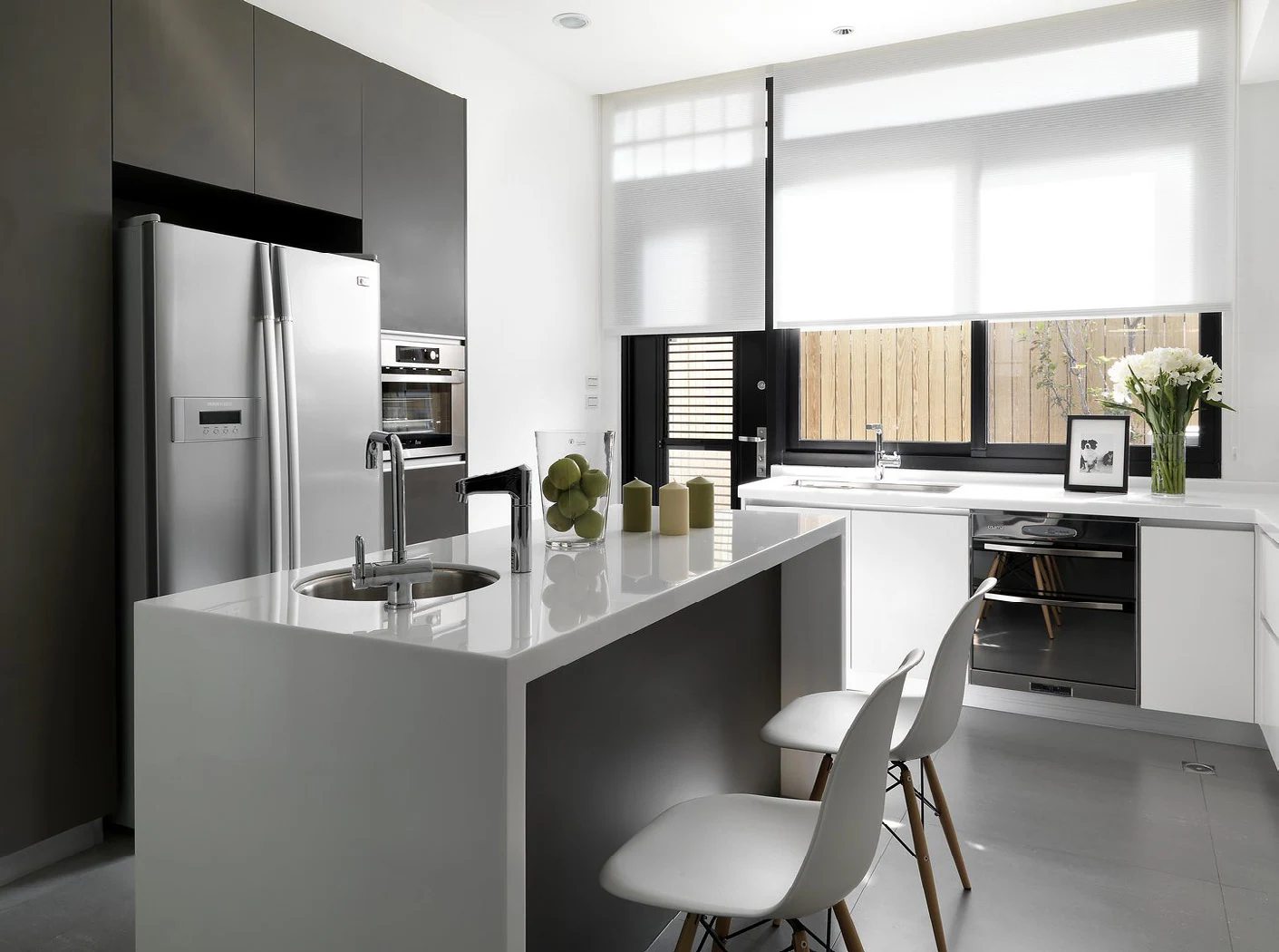
Start the design with what you know
You can discuss the layout before you have chosen every appliance. Share your room measurements, door and window positions, and which appliances you want to include.
Tell the designer what is still undecided. If you are comparing two fridges, send both model numbers. Ask which parts of the design can go ahead and which need to wait.
The important point is to keep an unfinished choice marked as unfinished. Do not approve the fridge cabinet dimensions until the selected model’s dimensions and installation instructions have been checked.
Choose the models that affect the cabinets
Start with the fridge, built-in oven, hob (cooktop), dishwasher and extractor hood. These can affect the space inside a cabinet, an opening in the worktop, or the position of nearby cabinets.
A fridge can fit in the space and still be difficult to use. If it is too close to a side wall, its doors may not open far enough to pull out the drawers. That is why the cabinet maker needs more than the fridge’s width.
The space needed depends on the model. For example, Fisher & Paykel’s refrigerator instructions show both the fridge size and the space needed to open its doors. Use the instructions for your own model.
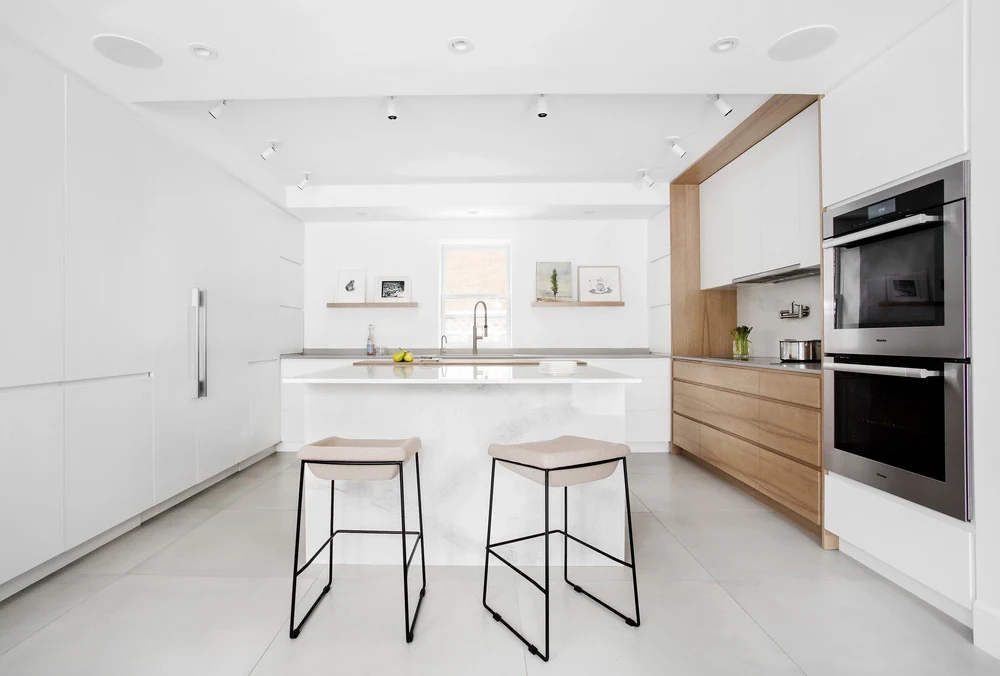
An appliance hidden behind a matching cabinet door needs extra checking: the panel must fit, and the door must be able to move properly.
A toaster sitting on an open worktop can usually be chosen later. If you want it inside a cupboard or in a specially sized space, discuss it earlier. The same applies to small appliances that need planned water, power or ventilation.
Send the model numbers and installation instructions
For each appliance that affects the cabinets, send your cabinet supplier:
- The brand and full model number, including any letters or numbers at the end. Use the model sold in your project country.
- The manufacturer’s installation instructions or dimension drawing. Ask the appliance seller for these if you cannot find them.
- What you have decided so far. Say whether you own it, have selected it but not bought it, or are still comparing options. Check availability with the seller before the design relies on that model.
A shopping-page screenshot may show the appliance’s size, but not all the space needed to fit and use it. An oven may also need space for air to circulate and a suitable power connection. Bosch’s oven installation guide shows examples and explains why the exact model’s instructions matter.
Ask your cabinet maker to check these documents against the cabinet drawings. Ask your local installer, electrician or plumber to check the connections they will handle.
You do not need to work out the technical details yourself. You need to know who is checking them and whether anything is still waiting for a decision.
Check the plan before ordering your cabinets
Before you approve the final drawings and place your cabinet order, check these points with your cabinet supplier:
- Does the final plan use the models you selected?
- Have the spaces, door movements and installation requirements been checked?
- Are any undecided items clearly marked, with the related work put on hold?
- Who is buying each appliance, and has the seller confirmed availability and delivery?
- When do the cabinet maker, worktop company and installer need the documents or the actual appliances? They may need them at different stages.
If you change a model, send the new details back for checking. A replacement described as the same size may still need a different opening or space around it. Ask whether the change affects the cabinets, worktop or connections before accepting it. A change does not always mean a cabinet must be remade.
You can agree to have appliances delivered later if that fits the work schedule. First confirm when the people making and fitting your kitchen need them for measuring or installation.
You can start planning now without buying every appliance. Keep undecided choices clear, and make sure the details that affect your cabinets are checked before you place the order. If you also need an early price, our materials quote guide explains what you can send while your plans are still developing.